

Dual-target antibacterial agents single molecules engaging two essential bacterial targets through intramolecular synergy are gaining traction as a strategy to counter AMR’s stalled pipeline

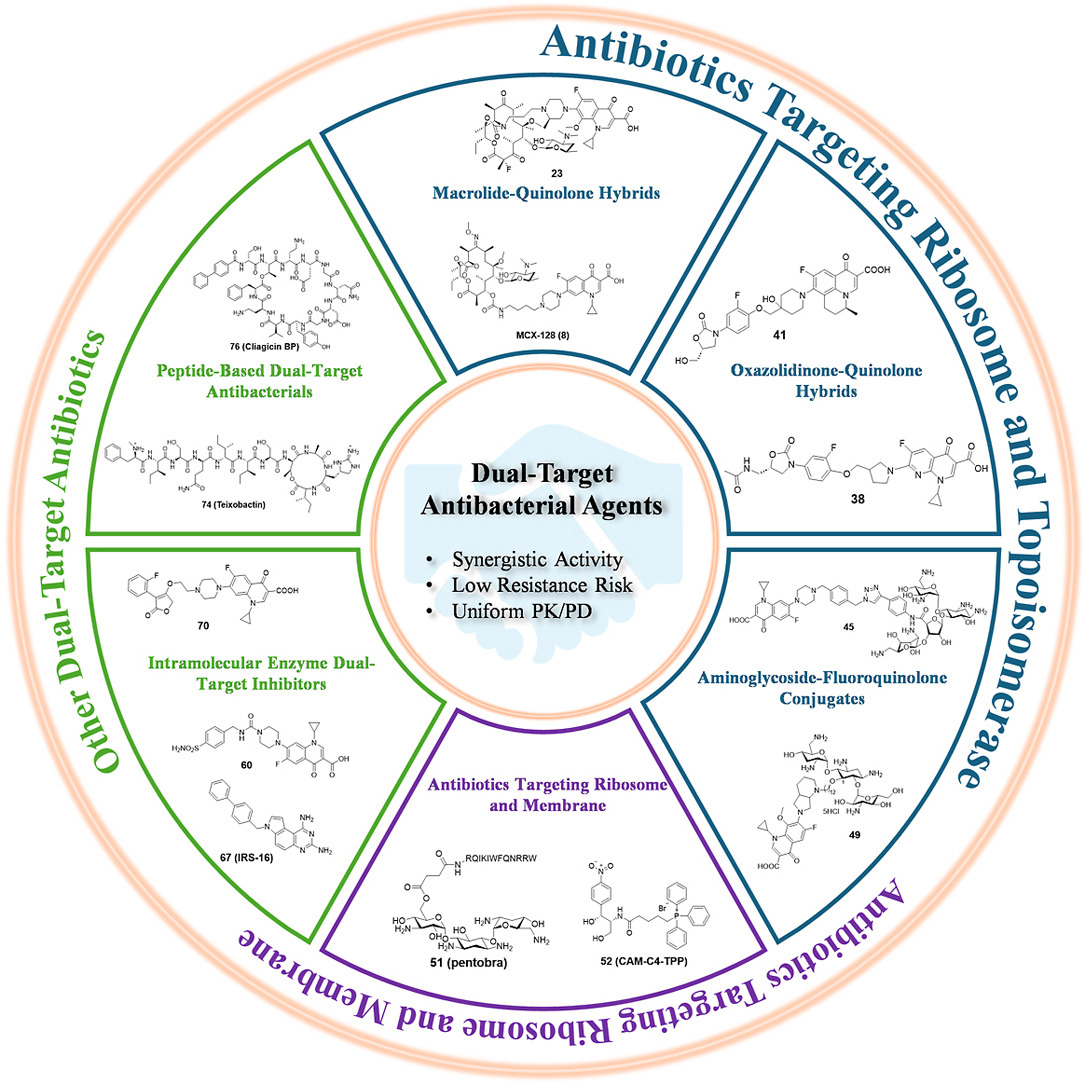
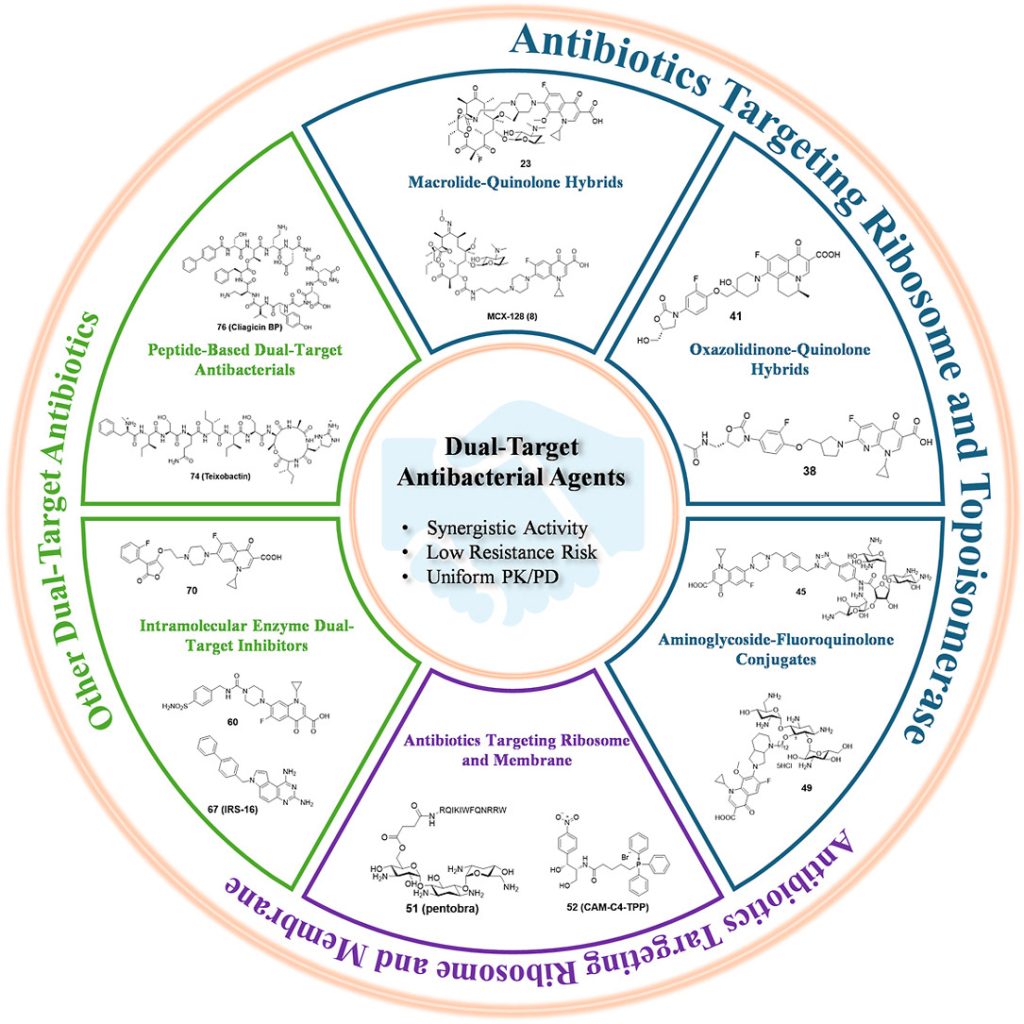
Dual-target antibacterial agents single molecules engaging two essential bacterial targets through intramolecular synergy are gaining traction as a strategy to counter AMR’s stalled pipeline: 90 agents in clinical development in 2025 (down from 97 in 2023), with only 5 active against WHO critical-priority pathogens. A new EJMC review (Li, Wang, Liang, 2026) quantifies the appeal: dual-target resistance requires simultaneous mutations in both pathways, dropping spontaneous mutation frequency from ~10⁻⁶–10⁻⁸ per generation (single-target) to ~10⁻¹²–10⁻¹⁶ per generation. 0
Gepotidacin, GSK’s first-in-class NBTI dually inhibiting DNA gyrase and topoisomerase IV, is the review’s clinical proof-of-concept.
Bugworks’ BWC0977 follows the same dual-target NBTI mechanism, now in Phase 1 out of Bangalore – a reminder that this pipeline gap is being closed by biotechs across the Global South, not only Big Pharma.
The harder problem isn’t finding dual-target chemotypes; it’s getting them past Gram-negative permeability and Lipinski limits into oral, deployable drugs.
https://doi.org/10.1016/j.ejmech.2026.119004